Powered By Blogger
Showing posts with label Christmas Culture. Show all posts

Sunday, December 24, 2017

The Season of Advent

The Season of Advent

Image result for the tradition of advent

Advent is the period of four Sundays and weeks before Christmas or sometimes the period from December 1 to Christmas Day.  The term Advent means "Coming" in Latin.  This is the period of celebrating the Lord's first arrival into this world as a newborn babe.  Christians use the four Sundays and week of Advent to prepare, remember and meditate upon the real meaning of Christmas.  There are three meanings of "coming" that Christians ascribe to the in the Advent.  The first meaning of "coming" is when Jesus came into this world to be born of a virgin, to live as a man, and to die for the sins of mankind.  The second can take place now if you'll repent of your sins and invite Jesus to reign in your heart.  The third meaning of "coming" is for the future when Jesus comes back to this world a second time and King and Judge.

Advent Sunday can be on the 27th of November (which it was in 2016) until the 3rd of December (which it was in 2017).  Advent only starts on the 1st of December when Christmas Day is on a Wednesday. 

No one is certain when Advent was first celebrating but it dates back to at least 567 when monks were ordered to fast during December leading up to Christmas.  Some people fast (abstain from food) during Advent to help them concentrate on celebrate Jesus' coming.  In many Orthodox and Eastern Catholic churches Advent lasts for 40 days and starts on November 15 and is called the Nativity Fast. 

There are two types of candles that are used to count down to Christmas Day in Advent.  The first looks like a normal candle, but has the days up to Christmas day marked down the candle.  On the first of December the candle is lit and burned down to the first line on the candle.  The same is done every day and then the rest of the candle is burned on Christmas Day.  Lutheran churches in Scandinavia used 24 little candles to count down through December through the 1700's. 

An Advent Crown is another form of candles used to count down Advent.  They are often used in churches rather than peoples' homes.  The crown is often made up of a wreath of greenery and has four candles round the outside and one in the middle or a separate place.  Sometimes a more traditional candelabra is used to display the five candles.  One candle is lit on the first Sunday of Advent, two are lit on the second Sunday and so forth.  Each candle has a different meaning in Christianity.  Different churches have granted them different meanings. 

1.  The first represents Isaiah and other prophets in the Bible that predict the coming of Jesus.

2.  The second represents the Bible.

3.  The third represents Mary, the mother of Jesus

4.  The fourth represents John the Baptist, Jesus' cousin, who told people in Israel to prepare for the Lord's coming.

The middle or separate candle is lit on Christmas Day which represents Jesus, the light of the world.  In Germany, the fifth candle is known as "Heiligabend' and is lit on Christmas Eve.  In many churches the color purple is used to signify the season of Advent.  On the third Sunday, representing Mary, the color is sometimes changed to pink or rose. 
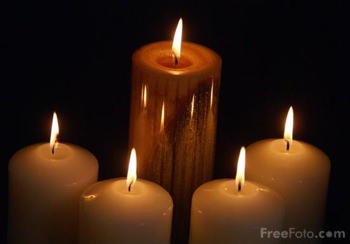
Advent CandlesImage result for advent candles

Saturday, December 23, 2017

Christmas in Brazil

Christmas in Brazil
Image result for christmas in brazil Image result for christmas in brazil

Many Brazilian Christmas traditions come from Portugal as Portugal ruled Brazil for many years.  Nativity scenes known as Presepio are very popular.  They are set up in churches and homes throughout all December.  Christmas plays called 'Os Pastores' the Shepherds, like the plays in Mexico, are very popular.  In the Brazilian versions of the play, there's also traditionally a shepherdess and a also a woman who tries to steal the baby Jesus.  Most people, esp. Catholics, attend a Midnight Mass Service or Missa de Galo (The Mass of the Roster).  The mass normally finishes around 1:00 a.m.  On Christmas Day, people might attend church again, but it's often in the afternoon.  After the Missa de Gallo, there are often big fireworks displays and in big towns and cities there are big Christmas Tree shaped displays of electric lights.  In Brazil, Santa Claus is often referred to as Papai Noel & Born Velhinho (Good Old Man).

Many Christmas customs are similar to the ones in the USA or the UK except its hot at Christmas time in Brazil.  Many people like to hang out at the beach.  Sometimes children leave a sock near the window.  If Santa finds the sock, then he'll exchange it for a present.  Also, many people in Brazil take part in the Secret Santa (Amigo Secreto) in Brazil.  It is traditional to give small gifts throughout December by using a pretend name.  On Christmas Day, people reveal who their Amigo Secreto is.  the most popular Christmas song in Brazil is Silent Night.  In Brazil it's common to get a '13th salary' at the end of the year, which is twice the normal amount of pay you receive for that month.  They do that to help boost the economy in Brazil for December.  That's been taking place for decades.  Favorite foods in Brazil include pork, turkey, ham, salads, and fresh and dried fruits.  Everything is served with rice, cooked with raisins, and a spoon of 'farfofa' which is seasoned manoic flower.  Popular Christmas desserts include tropical and ice cream.  Epiphany, where people remember the wise men visiting Jesus, is widely celebrated in Brazil. 

Thursday, December 21, 2017

Christmas in Norway


christmas in norway

Image result for christmas in norway  Image result for christmas in norway

Christmas Eve is the day that gifts are exchanged in Norway.  "Santa Claus", called (Julenissen in Norway) brings them.  Gifts are bought by the small gnomes called 'nisse'.  There are also hobgoblins (nisse) decorations.  Children pick up the gifts from under the Christmas tree and read the on the gifts out loud.  During Advent/December in Norway, small gifts are given each day in December leading up to Christmas day. 

In some parts of Norway, children like to go caroling.  Often children will dress up as characters from the Christmas Story, such as the Shepherds and the Wise Men, and go singing from house to house in their local neighborhood.  Sometimes they carry with paper stars on them.  Another tradition in parts of Norway is that families light a candle from Christmas Eve to New Year's Day. 

Christmas wasn't celebrated in Norway until around 1000 or 1100, when Christianity first came to the area.  Before this people celebrated jul or jol in the middle of winter.  It was a celebration of the harvest gone and a way of looking forward to Spring.  Lots of beer was brewed and drunk in honor of the old pagan Scandinavian gods.  Probably the most famous custom of Christmas in Norway is when Norway give the UK the big Christmas tree every year.  The tree is given as a gift to say "thank you" for the help that the people of the UK gave to Norway during World War II.  The tree stands in Trafalgar Square in the middle of London and often thousands of people come to watch when the lights are turned on.  To learn more about the traditions of Christmas in Norway, click on the above link.